Introduction
For RSL Helper device which relies on a consistent, uninterrupted data flow for game automation, frequent device disconnections are a critical failure point. Unlike a complete detection failure, repeated drops suggest a weak, unstable link, a problem that is highly volatile and difficult to isolate. The application begins its routine successfully but is constantly interrupted by momentary hardware or system communication lapses, forcing repeated restarts and severely crippling process effectiveness.
Symptoms of Repeated Disconnects
The Symptoms of Repeated Disconnects go beyond simple annoyance; they provide diagnostic clues. Users will observe RSL Helper’s connectivity status icon flicker from green to red, showing a loss of the ADB (Android Debug Bridge) or MTP (Media Transfer Protocol) connection. Windows often produces the characteristic USB disconnect-and-reconnect chime sequence in rapid succession. Furthermore, the device itself may appear to cycle its charging status, confirming the intermittent power or data signal instability at the physical layer.
Why Steadiness is Important for RSL Helper
Why Stability is Vital for RSL Helper is tied to its working requirements. The tool acts as a high-speed intermediary, constantly monitoring the game screen, calculating the following moves, and injecting commands back into the device. This process requires unbroken communication. Even a brief, millisecond-long interruption in the connection can cause the current script to lose its place, corrupt log data, or fail entirely, wasting both time and valuable in-game energy. Stability is, therefore, paramount to the tool’s effectiveness.
What Causes Frequent Device Drops in RSL Helper
Understanding the root cause is essential to implementing a permanent solution rather than simply applying short-term fixes.
- Power Supply Interruptions: This is a surprisingly common, yet subtle, cause. If the USB port cannot supply a stable 5V current, the device detects a voltage drop. In response, the device briefly terminates USB communication and restarts power negotiation, resulting in a momentary disconnect that drops the RSL Helper link. This is common on overloaded PCs or through unpowered hubs.
- Outdated or Corrupted USB Drivers: While drivers may be sufficient for initial detection, their integrity determines sustained reliability. Outdated or Corrupted USB Drivers can cause the host PC to struggle with continuous high-speed data streams, leading the operating system to drop the connection because of perceived connection faults, especially during periods of high activity.
- Poor Cable Quality or Connection Issues: The cable is the most vulnerable point. Poor Cable Quality or connection issues can cause signal weakening, electromagnetic interference, or intermittent physical contact within the port, which is even more intensified during data transfer. A charging cable may repeatedly fail during data-intensive automation.
Checking and Stabilising Power Supply
Power stability is a hardware prerequisite for reliable data transfer.
Ensuring Device Battery is Sufficient
When a device’s battery is very low, it demands maximum current from the USB port. This heavy draw can sometimes strain the PC’s power rail, leading to voltage instability. By ensuring the device battery is sufficiently charged (ideally above 50%), the current draw is minimised, resulting in a more uninterrupted power supply for data transfer.
Avoiding USB Power Variations
For desktop users, the ideal solution is to plug the device directly into the machine’s back ports. These ports are directly connected to the motherboard’s regulated power supply and are significantly more stable than front-panel ports, which often use internal extension cables that degrade power and signal quality.
Using Powered USB Hubs if Needed
If you are using a laptop or desktop with many high-draw peripherals, this becomes mandatory. A powered hub has its own external power adapter, providing a clean, dedicated, and uninterrupted power source (usually 5V, high amperage) to the device, completely bypassing any limitations or fluctuations from the host PC’s internal power supply.
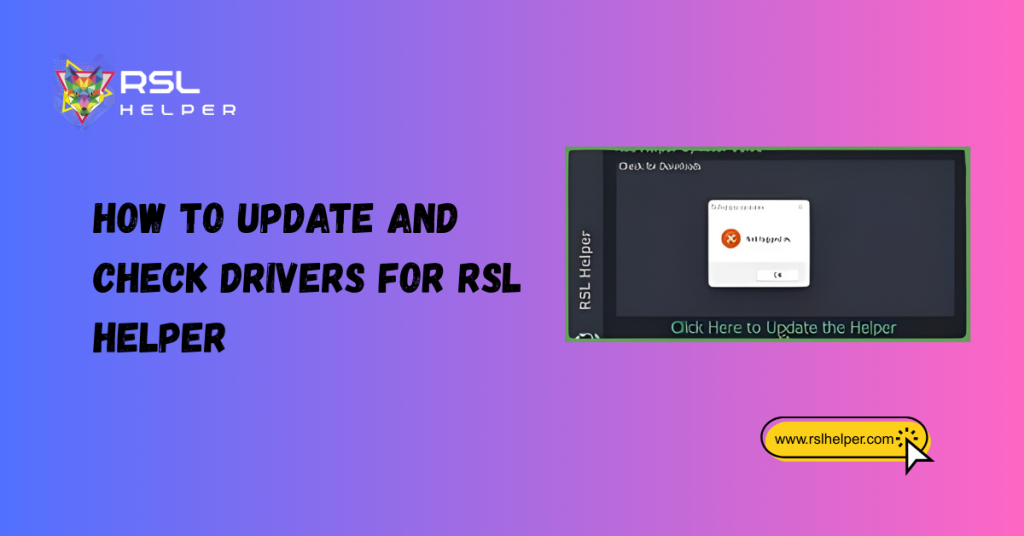
How to Update and Check Drivers for RSL Helper
System software must maintain the connection.
- Identifying Missing or Corrupt Drivers: The first step is to open the Windows Device Manager (right-click Start, select Device Manager). Look actively for devices listed under Universal Serial Bus controllers or “Other devices” that display a yellow warning symbol or are labelled as “Unknown Device”. These are your targets for driver repair.
- Installing Correct USB/ADB Drivers: Generic drivers are frequently inadequate for sustained reliability. The user must actively install the correct USB/ADB Drivers obtained directly from the device manufacturer’s website. After installation, verify in the Device Manager that the yellow mark is gone and the device is listed by name or as a recognised ADB interface.
- Testing Device Connectivity After Updates: A simple connection test is insufficient. Testing Device Connectivity After Updates requires running RSL Helper in a test session (e.g., 10-15 minutes of uninterrupted automation) to confirm that the stability fix is permanent, not just temporary.
Inspecting and Replacing USB Cables
The cable is the weakest physical link in the connection.
Using Premium cables
Cheap, generic cables often skimp on internal shielding and wire gauge, making them susceptible to external electromagnetic noise and internal resistance, which can cause data corruption and drops. Using Premium cables (preferably the manufacturer’s regular rsl helper device-disconnection cable or certified premium alternatives) is mandatory for stable data transfer.
Avoiding Long or Damaged Cables
The longer the cable, the greater the signal attenuation and the higher the chance of interference. Avoiding Long or Damaged Cables means using the shortest practical length (1 meter or less) and immediately discarding any cable with kinks, visible wear, or a loose fit in the port.
Properly Securing Connections During Use
Disconnects can be triggered by minor movements. Properly Securing Connections During Use involves ensuring the device is resting on a flat, stable surface where it cannot be bumped, and that the cable is not strained or pulled at the connection points.
Advanced Troubleshooting for RSL Helper device Issues
These steps address environmental problems or underlying system issues.
Resetting USB Ports
This is a software reset of the USB controller. Resetting USB Ports is done in the Device Manager by right-clicking and uninstalling the devices listed under Universal Serial Bus controllers (not the hub or root entries). After uninstallation, restart the PC, and Windows will automatically reinstall a clean set of drivers for the controllers, clearing any configuration corruption.
Using Alternative USB Ports
Not all ports are created equal. If the current port is USB 2.0, try a faster USB 3.0 or 3.1 port (often distinguished by blue or red plastic inserts). Using alternative USB Ports can isolate the issue to a failing physical port or a conflict with a specific USB controller chip on the motherboard.
Checking for Background Software Conflicts
Temporarily disabling system-level software is necessary. Checking for Background Software Conflicts involves pausing antivirus, VPNs, or network firewalls that might be attempting to filter or manage the low-level data packets being transmitted via the USB connection, resulting in communication timeouts and drops.
Tips for Reliable Long-Term Device Connection
Preventative actions minimise the risk of recurrence.
Routine Driver Updates
Routine Driver Updates should be performed to ensure the system is running the most stable version of the device driver available. This is fundamental after major Windows operating system updates, which can sometimes break driver compatibility.
Safe Power Management Practices
Within Windows Power Options, go to Change advanced power settings, navigate to USB settings, and ensure the “USB selective suspend setting” is disabled. Safe Power Management Practices prevent Windows from unilaterally turning off power to the USB ports to save energy during periods of perceived inactivity.
Avoiding Frequent Hardware Swaps
Once a stable combination of port, cable, and device settings is confirmed, avoiding frequent hardware swaps minimises configuration confusion and decreases wear and tear on the hardware connectors.
Frequently Asked Questions
Why does my device disconnect often in RSL Helper?
Your device disconnects frequently in RSL Helper, mainly due to unreliability at the physical layer: Power Supply Interruptions, poor cable quality, or corrupted USB Drivers that cannot sustain a continuous data stream.
Can low power or battery issues cause frequent drops?
Yes, low power or battery issues can cause frequent drops. A low battery draws maximum current, potentially overloading the USB port’s voltage output, causing the device to perform connection resets.
How do I update USB device drivers for RSL Helper?
To update the USB device drivers for RSL Helper, download the official ADB/MTP packages from the device manufacturer’s website, then manually remove any previously installed faulty drivers in Device Manager before installing the new ones.
Are certain cables more reliable than others?
Yes, certain cables are more reliable than others. You should prioritise using short (under 1m), high-quality, shielded cables, as they offer better protection against signal interference than long or generic cables.
Can a USB hub fix disconnection problems?
A powered USB hub can fix disconnection problems by supplying a stable, dedicated electrical current to the device, which isolates it from the potentially fluctuating power output of the host computer’s motherboard ports.
Does background software impact device consistency?
Yes, background software can impact hardware stability. Security suites, network managers, or concurrent ADB tools can interfere with the data connection, leading to drops and connection faults.
How do I test if the port or cable is the issue?
You test whether the port or cable is the issue through a step-by-step approach, changing variables: swap the cable for a verified good one, then try a different port type (e.g., USB 3.0 instead of 2.0).
What steps prevent disconnects in long sessions?
Steps to prevent disconnects during long sessions include using a Powered USB Hub, disabling Windows’ USB Selective Suspend feature, and ensuring the device is fully charged before starting.
Conclusion
Troubleshooting frequent disconnections requires a careful, hardware-first approach. By adopting a step-by-step approach to address potential issues in power supply, cable integrity, and driver stability, users can eliminate the root causes of intermittent communication failures. The strength of the RSL Helper workflow depends entirely on the quality and stability of the underlying connection.
Power, Drivers & Cables for Stable Use
Achieving smooth operation depends on three non-negotiable factors: ensuring Correct power delivery via stable ports or a powered hub; keeping current drivers for accurate data communication; and utilising premium cables to prevent signal deterioration. This complete solution ensures the stability required for uninterrupted automation.
Latest Post:
- RSL Helper Stuck on Loading Screen: Fix with Cache Reset & Config Check
- RSL Helper Installation Failed—Common Causes Explained
- RSL Helper Apps Stuck During Installation—Causes and Solutions
- RSL Helper Shows Success but App Isn’t Visible – What’s Happening?
- RSL Helper Corrupted App Installations—How to Resolve