Introduction
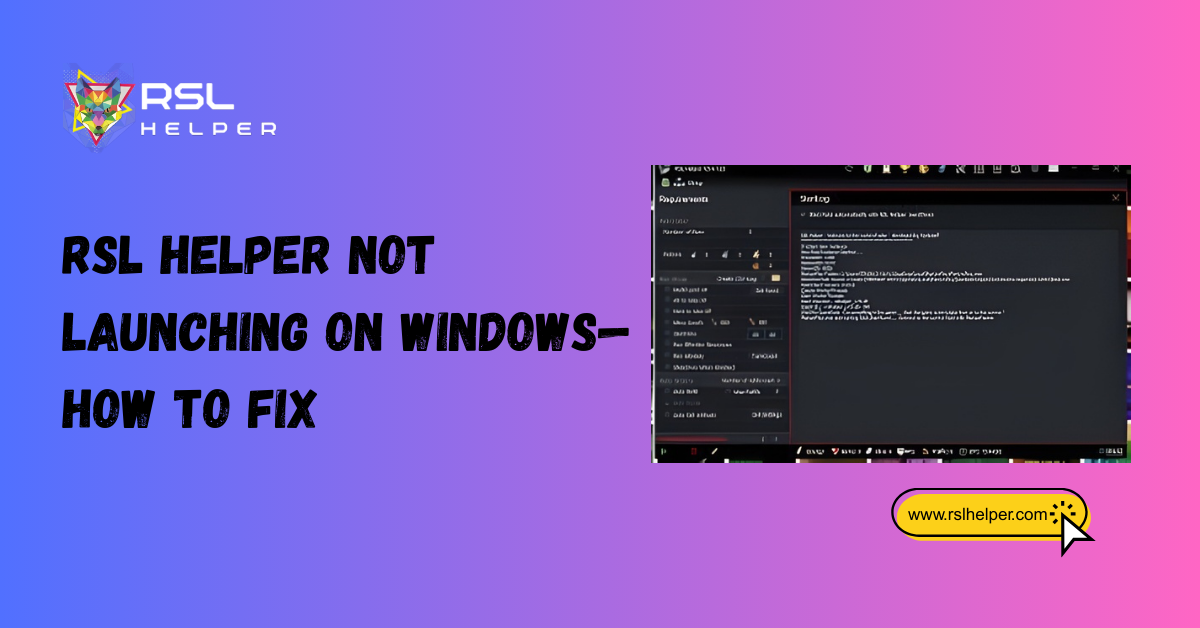
When RSL Helper fails to launch, the cause is typically an issue with the host Windows operating system’s security settings, required support files, or permissions, rather than a bug in the application itself.
Common Launch Problems Explained
Common launch problems explained usually involve the system actively blocking the program’s execution due to strict security measures (like an antivirus or UAC) or the absence of necessary foundational software libraries.
How Permissions and Antivirus Affect Startup
Permissions and antivirus affect startup and involve the system refusing the program access to files (permissions) or treating the executable as a threat and quarantining it (antivirus), both of which prevent the application from loading.
Importance of Runtime Dependencies
The importance of runtime dependencies stems from the fact that RSL Helper relies on specific versions of software, such as the .NET Framework. If these are missing, outdated, or corrupted, the program cannot initialize and will fail immediately upon startup.
What Prevents the RSL Helper from Starting
- Missing or Corrupted Runtime Components: The Windows system lacks the required version of .NET or Visual C++ Redistributables to run the tool.
- Permission Restrictions in Windows: User Account Control (UAC) or specific folder security settings block the tool from accessing necessary configuration files.
- Conflicts With Antivirus or Security Software: Security software mistakenly identifies the RSL Helper executable as malware and blocks or deletes the file.
How to Check Windows Permissions for RSL Helper Launch
This section addresses issues where Windows security or user account settings prevent RSL Helper from starting or accessing necessary files.
| Running as Administrator | Right-click the RSL Helper shortcut and select “Run as administrator.” | The tool launches successfully, proving the account lacked necessary privileges. |
| Verifying User Account Control (UAC) Settings | Temporarily lower the UAC level (via Windows Settings) to see if the aggressive security prompt is the blocker. | If launching works, the UAC was too restrictive. Raise UAC back up and run only as administrator. |
| Adjusting Folder Access Permissions | Navigate to the RSL Helper installation folder, right-click -> Properties -> Security, and ensure your user account has Full Control or Modify permissions. | The tool can now read/write configuration files without Windows restrictions. |
Handling Antivirus and Security Interference
Security software is a frequent cause of launch failure. Your primary goal is to ensure your antivirus or security suite is not actively blocking or deleting the RSL Helper executable.
Identifying Blocked Executables
First, check your antivirus quarantine or history log to confirm the RSL Helper executable has not been blocked or deleted. If the file is found, restore it from quarantine and proceed to the next step immediately.
Adding RSL Helper to Exclusions
This requires explicitly whitelisting the RSL Helper installation folder and the main executable file within your antivirus or Windows Defender settings. Once whitelisted, the tool is ignored by real-time scanning, preventing future blocking.
Temporary Disabling for Troubleshooting
As a last resort for definitive diagnosis, you can perform temporary disabling for troubleshooting and temporarily disable the antivirus during the launch attempt. If the tool launches successfully after this temporary disablement, you confirm that the antivirus is the source of the conflict and that permanent exclusion settings are needed.
Check Runtime Dependencies for RSL Helper
This section addresses issues with missing or corrupted software components that RSL Helper requires to run (e.g., the .NET Framework). Addressing these dependencies ensures the application has the necessary foundation to initialize.
Required .NET Framework or Visual C++ Redistributables
Search for the latest .NET Framework and Visual C++ Redistributable packages required by RSL Helper (usually listed on the program’s official site), then download and install them. The successful installation of these packages is often confirmed when the program initializes for the first time.
Updating Windows to Support RSL Helper
Ensure your Windows OS is fully up to date, as many crucial runtime components are bundled with the latest OS security patches. This guarantees the system has the most current framework environment needed by RSL Helper.
Fixing Corrupted or Missing Components
If components are installed but the tool still fails to launch, you can use the Microsoft .NET Framework Repair Tool to repair potential corruption in the dependency files, resolving internal errors in the required runtime environment.
Advanced Launch Fixes
Compatibility Mode Adjustments
If the system is older (e.g., Windows 7/8), right-click the executable, select Properties, and try running the program in Compatibility Mode for an earlier version of Windows.
Checking Event Viewer for Errors
Open the Windows Event Viewer, go to Windows Logs -> Application, and look for any red “Error” entries immediately following your failed launch attempt. This often reveals the specific module that crashed.
Cleaning Temporary Files and Cache
Delete the contents of your %temp% folder to clear any lingering, corrupted session files that might be causing a startup error.
Cleaning Temporary Files and Cache
Delete the contents of your %temp% folder to clear any lingering, corrupted session files that might be causing a startup error.
Reinstalling RSL Helper Safely
If all troubleshooting fails, perform a clean reinstall to eliminate corrupted files.
- Removing Previous Installations: Use the Windows “Add or remove programs” utility to completely uninstall RSL Helper.
- Ensuring Clean Install Path: Manually check the old installation directory and delete any residual files/folders before installing the new version.
- Preserving User Settings: If you want to keep your old settings, back up the configuration files (usually in the AppData folder) before uninstalling.
Preventive Measures for Future Launch Stability
- Keeping Antivirus Configurations Updated: Periodically check that your antivirus exclusion rule for RSL Helper remains active and valid after each software update.
- Avoiding Conflicting Software: Be mindful of other game overlays or system monitoring tools that might interfere with RSL Helper’s ability to interact with the game.
- Regularly Check for Runtime Updates: Stay informed about any new prerequisites (e.g., a new .NET version) required by the RSL Helper developers.
FAQs
Why is RSL Helper not launching on Windows?
RSL Helper usually does not launch on Windows due to missing or corrupted runtime components (such as the .NET Framework), strict permission restrictions, or blocks imposed by antivirus or security software.
How do I fix permission issues preventing launch?
To fix permission issues preventing launch, right-click the executable and select Run as Administrator, and ensure your user account has adequate folder access permissions in the installation directory.
Can an antivirus block RSL Helper from starting?
Yes, an antivirus can block RSL Helper from starting if it mistakenly classifies the program as a threat. You must add RSL Helper to exclusions in your security software settings.
Which runtime dependencies are required?
The most critical runtime dependencies are usually the latest version of the .NET Framework and specific Visual C++ Redistributable packages for Windows.
How to run RSL Helper as an administrator?
To run RSL Helper as an administrator, right-click the shortcut or executable file, select Properties, go to the Compatibility tab, and check the box that says “Run this program as an administrator.”
Do I need to reinstall Windows components to fix the issue with launching?
You may not need a full reinstall, but you may need to install the necessary .NET Framework or use the official repair tool to fix corrupted or missing components.
Will compatibility mode help with launch issues?
Compatibility Mode Adjustments can help launch issues if you are running an older version of Windows (like Windows 7 or 8) that requires the program to emulate an earlier environment.
How can I prevent RSL Helper from failing in the future?
You can prevent RSL Helper from failing in the future by keeping antivirus configurations updated, avoiding conflicting software, and ensuring all required .NET Framework dependencies are up to date.
Conclusion
A systematic approach to troubleshooting launch failures is always more effective than immediate reinstallation. By methodically addressing permissions, security blocks, and runtime dependencies, stability can be restored quickly.
By diligently checking Windows Permissions, configuring your Antivirus and Security Interference settings, and Verifying Runtime Dependencies, you ensure a clean, Smooth Startup for stable RSL Helper use going forward.
Latest Post:
- RSL Helper Stuck on Loading Screen: Fix with Cache Reset & Config Check
- RSL Helper Installation Failed—Common Causes Explained
- RSL Helper Apps Stuck During Installation—Causes and Solutions
- RSL Helper Shows Success but App Isn’t Visible – What’s Happening?
- RSL Helper Corrupted App Installations—How to Resolve